
Reviewed · FRENCH BASQUE COAST TOURS
French Basque Countryside Tour from San Sebastian
A Basque day trip with zero driving stress. You get private pickup and drop-off from your San Sebastián address and a local guide who connects the dots between small French villages, Basque traditions, and the Camino. I like that the plan is built for real wandering, not rush-hour sightseeing, and photo-friendly stops around Sare’s shutter colors and Espelette’s famous pepper drying on house facades. One thing to consider: food and drinks are not included, so you’ll want to budget for meals and any tastings along the way.
I also love how the day mixes easy strolling with place-based context. You’ll see why people care about Espelette peppers, and why Saint-Jean-Pied-de-Port feels like a starting gate to Spain. If you want a lot of big-ticket monuments, this isn’t that kind of tour. It’s more about people, streets, and the quiet rhythm of the French Basque countryside.
In This Review
- Key highlights in plain terms
- French Basque countryside, without the hard parts
- Getting to Sare: shutters, hills, and that slow village feeling
- Espelette peppers: the smell of summer and the story behind the spice
- Saint-Jean-Pied-de-Port: Camino walls and a fortress viewpoint
- Price and value: why $353.49 can make sense for this route
- What’s the group experience like with this setup?
- Pace, weather, and what to pack for a smooth day
- Who should book this French Basque countryside tour?
- Should you book it?
- FAQ
- What towns are included in the tour?
- How long is the French Basque countryside tour?
- Is food and drink included?
- Does the tour include hotel pickup and drop-off?
- Is this tour private?
- What language is the tour offered in?
- Can I cancel for a full refund?
Key highlights in plain terms
- Private, door-to-door transfers so you’re not wrestling buses or rental-car parking
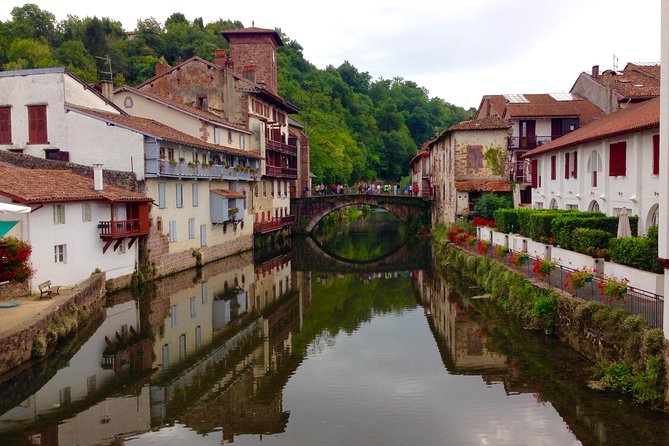
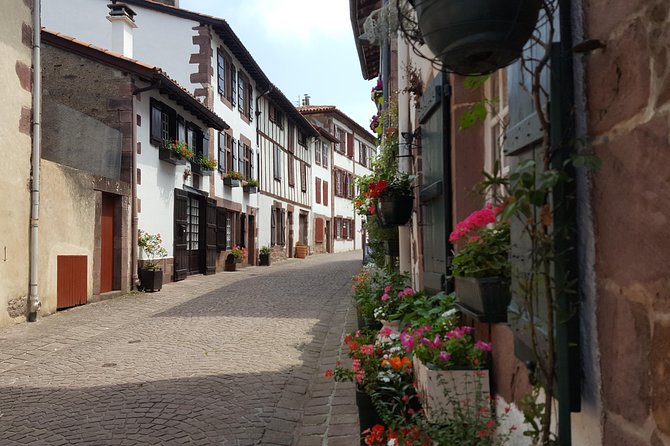
- Sare’s classic Basque look: whitewashed walls and red or green shutters for instant postcard photos
- Espelette pepper focus with streets lined by peppers drying on facades in summer
- Camino atmosphere in Saint-Jean-Pied-de-Port, including the Navarre Gate and Rue de la Citadelle
- All fees covered for the listed stops, plus air-conditioned transport and an English-speaking guide
French Basque countryside, without the hard parts
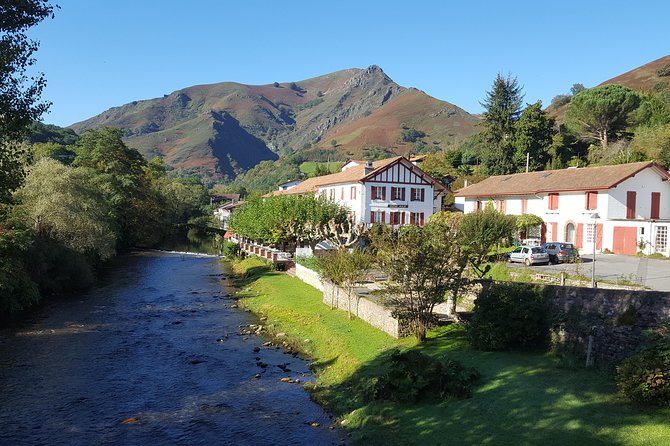
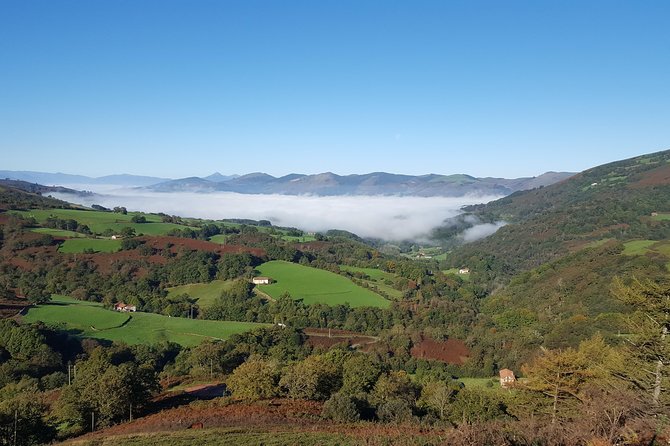
San Sebastián sits right next to the French Basque region, but “next door” doesn’t always mean “easy.” This tour solves the annoying parts: you leave from where you’re staying, ride in an air-conditioned vehicle, and return the same day. It’s also private, meaning it’s just your group, not a mixed crowd of strangers.
The day runs about 8 hours, with three main village stops. The pace is described as easy-going, so you’re walking at a comfortable rhythm through town centers, viewpoints, and shop streets. And because the guide is local to the region (I’ve seen names like Ander and Nina, and other guides like Mikel show up as well), you’re not just hearing general facts. You get the “why” behind the architecture, the food culture, and the Camino’s role as a crossroads between France and Spain.
One practical note: this is a pay-for-the-ride-and-the-guide kind of day. You’re not paying for a full meal program. Food and drinks are not included unless specified in inclusions, so think of lunch and snacks as your choice, with help from the guide.
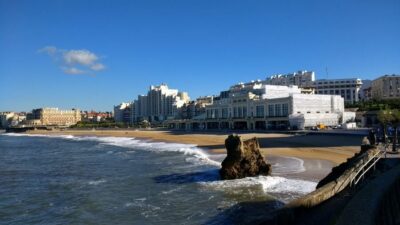
Across to Biarritz and the French side, more
Getting to Sare: shutters, hills, and that slow village feeling
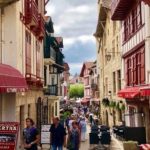
Your first stop is Sare, a mountain village with a classic Basque look. Picture green hills around you and streets of traditional whitewashed houses finished with red or green shutters. It’s the kind of place where your photos work even without planning. You can just wander and the town gives you corners to frame.
What makes Sare a smart first stop is timing and mood. It’s earlier in the day, when you’re still fresh from the ride and less likely to feel “tour-worn.” You’ll have about an hour to stroll through the old town. That’s enough time to:
- Walk the lanes at a relaxed pace
- Notice the details on house fronts
- Pause for scenic views when you spot them
A small consideration: Sare is a village town-walk style experience. If you want nonstop structured activities, this may feel simple. But if you like places where Basque identity shows up in everyday architecture, Sare is a strong start.
Espelette peppers: the smell of summer and the story behind the spice
Next comes Espelette, and yes, the main reason is the famous Espelette pepper. But this stop isn’t only about seeing peppers hanging. It’s about understanding how a regional ingredient becomes a cultural symbol.
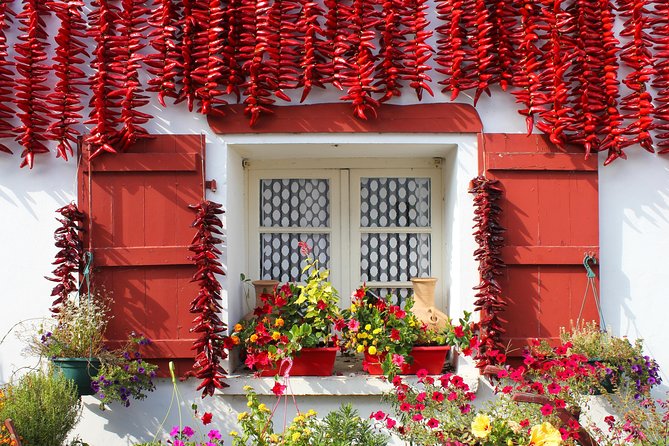
In the streets, you’ll likely notice peppers drying on the facades of houses. In summer, it’s an immediate visual. Red pepper strings become part of the street scene. It’s also one of those photo stops where you’ll want your camera ready, because the pattern shows up everywhere: doorways, walls, and small shop fronts.
Then there’s the “how it works” side. You may have time tied to pepper production, such as a farm visit or the Pepper Museum, plus browsing local shops for regional treats like pâtés and jams. This is where the guide’s context matters. You don’t just buy a souvenir spice. You understand what people are protecting, why the pepper matters, and how it shows up in Basque cooking habits.
One drawback to consider: pepper-focused stops can feel a little repetitive if you’re not into food culture. If you are, though, Espelette is exactly the kind of place you’ll remember. It’s also easy to turn shopping into a fun, low-stress activity. Look for pepper in different forms, small gift-sized items, or jars you can pack home.
Saint-Jean-Pied-de-Port: Camino walls and a fortress viewpoint
Your final stop is Saint-Jean-Pied-de-Port, a medieval walled town and a key Camino de Santiago gateway. This is where the day shifts from “pretty village stroll” to “history that feels real under your feet.”
You’ll walk through Rue de la Citadelle, a cobbled street with stone houses, artisan shops, and traditional restaurants. Even if you’re not walking for hours, the atmosphere hits quickly. The stones, the winding street, and the village layout feel like you’ve stepped into a long-running pilgrimage route.
Two highlights to aim for:
- The Citadel area on the hill, for views toward the Pyrenees
- The Navarre Gate, a main entrance that marks the start of the Camino route in France
You’ll have about two hours here. That’s enough time to stroll, take photos, and still have room to choose a lunch spot without rushing. In practice, many guides are good at lunch timing because they know where people like to eat and how to help you pick something that fits your day. Some days include a recommended lunch along the river area, and you may also find the guide steering you toward local flavors.
Food note again: meals and drinks are not included as part of the tour price. Still, the guide can help you land on a solid option that suits what you’ve seen that day.
- San Sebastian Old Town Pintxos & Wine Tour Small Group Tour★ 5.0 · 1,102 reviews
- San Sebastian: Boat Tour with Stop at Santa Clara★ 4.6 · 733 reviews
- San Sebastian Pintxo Food, Wine & Market Foodie Tour(Small Group)★ 5.0 · 621 reviews
- Small-Group Electric Bike Tour in San Sebastián★ 5.0 · 603 reviews
- Discover San Sebastián’s Best Pintxos on a Unique Culinary Tour★ 5.0 · 602 reviews
Price and value: why $353.49 can make sense for this route
At $353.49 per person for roughly 8 hours, this isn’t the cheapest way to see three towns. But it often feels fair because you’re paying for the parts that are hard to DIY cleanly.
Here’s what you get that protects your time:
- Hotel pickup and drop-off in San Sebastián (including a pickup from your address if you share your accommodation details)
- Air-conditioned vehicle for the whole route
- A local guide who covers history and culture in context
- All fees and taxes for the included experience elements
- Listed admissions for the stops show as free, which helps avoid surprise charges
If you tried to do this on your own, you’d spend time figuring out routes, connection schedules, and where to park once you’re in tiny village centers. This tour trades that hassle for a smooth day and a guide who knows where to pause and what to notice.
The private setup is another value lever. Because it’s just your group, you get more flexible pacing. You can linger in Sare for one extra photo cluster, or slow down in Espelette if the pepper facades are pulling you in.
What’s the group experience like with this setup?
Despite being private, the tour is still designed as a shared guided day with easy strolling. Expect time allocations around about 1 hour in Sare, about 1 hour in Espelette, and about 2 hours in Saint-Jean-Pied-de-Port.
The guide role is key. People get enthusiastic about the guides because they combine facts with practical village navigation: what to look for, where the best street scenes are, and how to connect pepper culture and Camino history to the Basque identity of this border region. Names you might hear include Ander and Nina, and guides like Mikel also appear as part of the same local-guided style.
One last practical thing: bring your walking shoes. This isn’t marathon trekking, but you will be on cobbles in places and doing steady walking for a full day.
Pace, weather, and what to pack for a smooth day
Most travelers can participate, and the strolls are described as easy-going. Still, the region can change its mood quickly. Even on wet days, the tour style works because you’re not stuck in a single big indoor site all day. You’ll keep moving through town centers where the streets and shop fronts still do their job.
For comfort, I’d pack:
- A light rain layer just in case
- Sunscreen and a hat for brighter pepper-facade photo moments
- A small day bag for a pepper jar purchase or souvenirs
- Cash or card for food since meals aren’t included
If you’re sensitive to walking on uneven surfaces, plan to go slow in cobbled old-town stretches. The tour format gives you time to adjust, but it’s still village footing.
Who should book this French Basque countryside tour?
This works best if you want:
- A Basque culture day that isn’t limited to San Sebastián
- Villages with strong local character like Sare and Espelette
- A Camino-related stop that feels more atmospheric than a checklist
- A guide who can explain what you’re seeing, not just point it out
It’s also a great match if you hate driving. The pickup-and-drop-off model removes the biggest barrier to exploring this border region.
If you’re chasing only the famous showpiece sights, you might find the towns “too small” for your taste. But if you love simple streets, meaningful food culture, and slow travel energy, this is exactly the kind of day that makes a trip feel complete.
Should you book it?
I’d book it if you want a stress-free day where Sare’s shutter streets, Espelette pepper culture, and Saint-Jean-Pied-de-Port’s Camino gateways all connect in one clean loop. The price feels more reasonable once you factor in private transfers, air-conditioned transport, and a guide who can turn three towns into a coherent story.
Skip it if you want a food-and-wine package with meals included, or if you dislike walking through charming old towns. This tour is built for wandering and learning through atmosphere, not for a nonstop program.
FAQ
What towns are included in the tour?
You visit Sare, Espelette, and Saint-Jean-Pied-de-Port, with guided strolling time in each town.
How long is the French Basque countryside tour?
It runs for about 8 hours (approx.), starting at 9:00 am.
Is food and drink included?
No. Food and drinks are not included, unless specified in the inclusions.
Does the tour include hotel pickup and drop-off?
Yes. Pickup offered, with hotel/accommodation pickup details collected at booking.
Is this tour private?
Yes. It is described as a private tour/activity, so it’s only your group.
What language is the tour offered in?
The tour is offered in English.
Can I cancel for a full refund?
Yes. Free cancellation is available if you cancel up to 24 hours in advance for a full refund.
More Donostia Trips, Reviewed
- San Sebastian Old Town Pintxos & Wine Tour Small Group Tour
★ 5.0 · 1,102 reviews - San Sebastian: Boat Tour with Stop at Santa Clara
★ 4.6 · 733 reviews - San Sebastian Pintxo Food, Wine & Market Foodie Tour(Small Group)
★ 5.0 · 621 reviews - Small-Group Electric Bike Tour in San Sebastián
★ 5.0 · 603 reviews - Discover San Sebastián’s Best Pintxos on a Unique Culinary Tour
★ 5.0 · 602 reviews - San Sebastian: Sustainable Catamaran Cruise with Audio Guide
★ 4.2 · 527 reviews
Over to the French Basque Coast
- Biarritz and French Coast tour from San Sebastian or Bilbao
★ 4.5 · 197 reviews - Private Cultural Tour: Biarritz, St Jean de Luz & Hondarribia
★ 5.0 · 64 reviews - Biarritz & French Basque Coast Private Tour from San Sebastian
★ 5.0 · 49 reviews - Private Bayonne, Biarritz & St Jean de Luz from San Sebastian
★ 5.0 · 47 reviews - Private French Basque Country Food Tour from San Sebastian
★ 5.0 · 40 reviews - Biarritz and Bayonne from San Sebastian
★ 4.2 · 35 reviews
Just Added: Fresh San Sebastian Tours in the Book


French Basque Coast Tours, compared.
 ★ 4.5Biarritz and French Coast tour from San Sebastian or BilbaoFrom $95197 reviews
 ★ 5.0Private Cultural Tour: Biarritz, St Jean de Luz & HondarribiaFrom $36864 reviews
 ★ 5.0Biarritz & French Basque Coast Private Tour from San SebastianFrom $75049 reviews
 ★ 5.0Private Bayonne, Biarritz & St Jean de Luz from San SebastianFrom $35447 reviews
 ★ 5.0Private French Basque Country Food Tour from San SebastianFrom $50540 reviews
 ★ 4.2Biarritz and Bayonne from San SebastianFrom $9335 reviews
 ★ 5.0French Coast: Bayonne, Biarritz, San Juan de Luz – Private TourFrom $33534 reviews
 ★ 4.9From San Sebastian or Bilbao: Biarritz and French Coast TourFrom $25929 reviews
Browse the lists this tour appears in