
Reviewed · FRENCH BASQUE COAST TOURS
French-Basque Countryside Private tour Discover the hidden beauty of Pyrenees
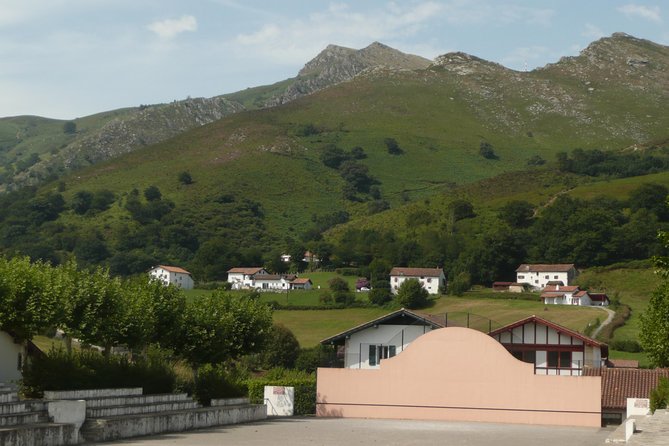
A private day in the French Basque Countryside makes the border feel close. You’ll travel by private vehicle, stop in storybook villages, and hear Basque culture explained in plain language as you move between places that feel worlds apart.
I especially like the one-guide, one-group approach. It means you can ask questions, slow down for photos, and get context you’d miss on a bus day. The other big win is the mix of stops, from pilgrimage-era stone streets to the famous pepper town look—plus time in classic villages like Ainhoa and Sare.
One consideration: food and drinks aren’t included, so you’ll want a plan for lunch/snacks and not rely on the tour price to cover meals. Also, this is listed as suitable for most travelers, but it’s still a full 7 to 8 hour outing with driving and walking.
In This Review
- Key highlights worth planning for
- How BasqueGuides turns a day trip into something personal
- Pickup, timing, and the 7–8 hour rhythm from San Sebastian
- Saint-Jean-Pied-de-Port: the medieval Camino start point
- Bidarray and the Pass du Roland road trip to Espelette
- Espelette’s peppers and Labourd-style house facades
- Ainhoa: jai-alai by the church and a cemetery of disc-topped monuments
- Sare at the foot of La Rhune: prehistoric roots with preserved village life
- Price and what you’re really getting for $433.48 per person
- Who this tour fits best (and who should think twice)
- Should you book this French-Basque countryside private tour?
- FAQ
- What time does the tour start?
- Is hotel pickup and drop-off included?
- Is this tour private?
- What language is the tour offered in?
- How long is the tour?
- Where does the tour go?
- Are entrance fees included?
- Does the tour include food and drinks?
- What transportation is used?
- What is the cancellation policy?
Key highlights worth planning for
- Private tour just for your party, with a driver/guide and professional guide handling navigation and commentary
- San Sebastian hotel pickup and drop-off for less hassle and more day-trip time
- St-Jean-Pied-de-Port as a major Camino de Santiago starting point in this region
- Espelette’s pepper culture, with dried red peppers hanging from Labourd-style house facades
- Pass du Roland scenery on the way through the countryside (drive time is part of the experience)
- Local-guided storytelling from named guides like Juan and Daniel, who bring strong affection for Basque life
How BasqueGuides turns a day trip into something personal
The tour is run by BasqueGuides, a specialist guiding company focused on Basque Country culture, gastronomy, and geography. What you’re really paying for is not just transport, but a guide who knows how to connect the dots between language, farming life, and the architecture you see at each stop.
They work with native, multilingual guides who build tailor-made tours around what you care about. On this route, that shows up as a route that feels curated to you in the moment—less “stand here, move on” and more “here’s why this matters,” spoken in English.
If you’re the type who likes travel facts but hates a lecture, this fits. In the guide examples from the tour experience, Juan was praised for being exceptional, personable, and comfortable—like you were hanging out with a local friend. Daniel also stood out for strong knowledge and genuine fondness for the area, which is the difference between memorizing trivia and actually understanding a place.
Across to Biarritz and the French side, more
Pickup, timing, and the 7–8 hour rhythm from San Sebastian
The day starts at 9:00 am, with hotel pickup and drop-off included. If you’re staying in an apartment, you’re asked to share your accommodation address so pickup matches where you actually are. The tour is priced per person, but the key practical value is that the vehicle and guide are tied to your group, not a shared schedule.
Expect roughly 7 to 8 hours total, plus driving between the French Basque countryside villages. Bottled water is included, and the guide provides navigation and commentary during the ride—so you’re not stuck staring out the window wondering when you’ll stop.
A small but helpful detail: you’ll also have a mobile ticket. That reduces friction at the start of the day, especially when you’re crossing into different areas and moving through multiple towns.
Saint-Jean-Pied-de-Port: the medieval Camino start point
Your first major stop is Saint-Jean-Pied-de-Port, a town considered a key starting point for the famous St. James Way pilgrimage to Santiago de Compostela. Even if you’re not walking the Camino, it’s a strong place to begin because the history is visible right away in the medieval feel of the town.
You’ll also get helpful regional context: the area belonged to the Navarra kingdom, and Basque language is still spoken on both sides of the border. That matters because it turns the French Basque Country from a travel theme into a living reality—language isn’t a museum piece here.
Plan for about 1 hour 30 minutes at this stop, and the tour lists admission as free for the town time you’ll spend. In practice, you’ll want comfy shoes, since older towns can mean uneven ground and short uphill bits.
Why this stop is worth it: it sets the tone. The rest of the route explains Basque life through villages, farms, and traditions, and Saint-Jean-Pied-de-Port gives you the human and historical foundation first.
Bidarray and the Pass du Roland road trip to Espelette
After the medieval start, the tour turns into a countryside drive. You’ll pass through Bidarray (an off-the-track countryside town) and head along the famous Pass du Roland route to reach Espelette.
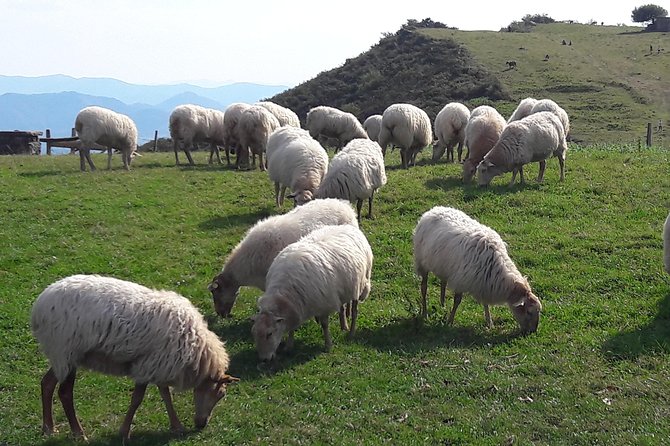
This is the part of the day many people underestimate. The driving time is not filler. It’s how you experience the Pyrenees edge of the Basque world—where the villages feel scattered because the terrain shapes settlement.
The tour then brings you into Espelette with a couple hours on the ground (about 2 hours). Admission is listed as free for this portion, which helps you spend time walking the streets instead of worrying about tickets.
Potential drawback here: if you’re someone who hates long road segments, this part can feel like more time in the car than you expected. But the guide commentary is meant to keep it interesting, not just travel time.
Your group only, with a guide
- San Sebastian Top Pintxos Private Tour★ 5.0 · 142 reviews
- Private Pintxos and Wine Tour in San Sebastián★ 5.0 · 101 reviews
- Private San Sebastian Pintxos Tour with Local Guide★ 5.0 · 83 reviews
- Private Cultural Tour: Biarritz, St Jean de Luz & Hondarribia★ 5.0 · 64 reviews
- Private Tour at a Family Winery and Basque Coast Route★ 5.0 · 54 reviews
Espelette’s peppers and Labourd-style house facades
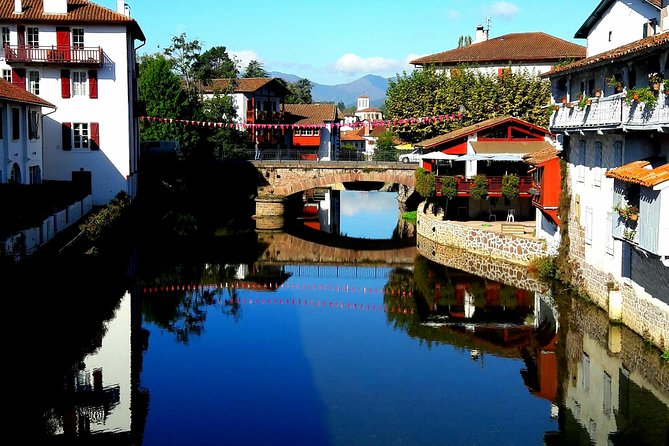
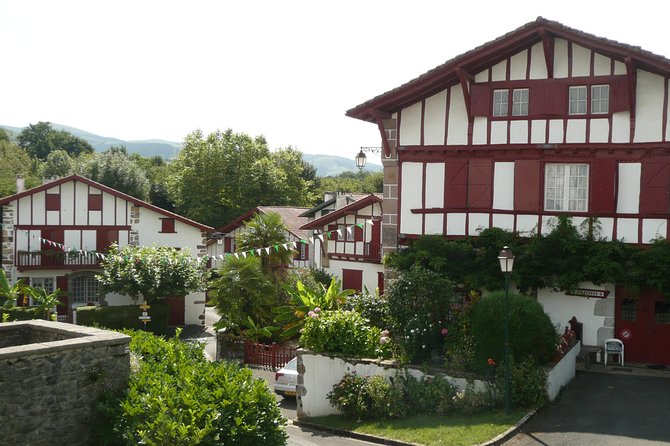
Espelette is the name people remember for a reason: dried red peppers are part of the town’s visual identity. You’ll see the peppers hanging from house facades, and the overall look is tied to local Labourd-style architecture.
That detail is more than decoration. It’s a snapshot of how agricultural traditions shape the everyday town look, which is why this stop works well on a private tour. Your guide can connect the pepper culture to how people farm, preserve, and trade—not just point out what to photograph.
You’ll have enough time to slow down in the streets and notice the patterns: house form, local color, and the way the peppers appear like signage for the village itself. If you’re into regional food culture, this is the easiest stop on the route to turn into a souvenir memory, even if you’re not shopping heavily.
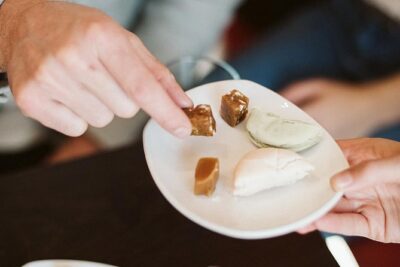
And yes, the tour includes tasting local agricultural products, but the specific items aren’t listed in the information you provided. So treat this as an opportunity to try something local during the day rather than a guaranteed full meal.
Ainhoa: jai-alai by the church and a cemetery of disc-topped monuments
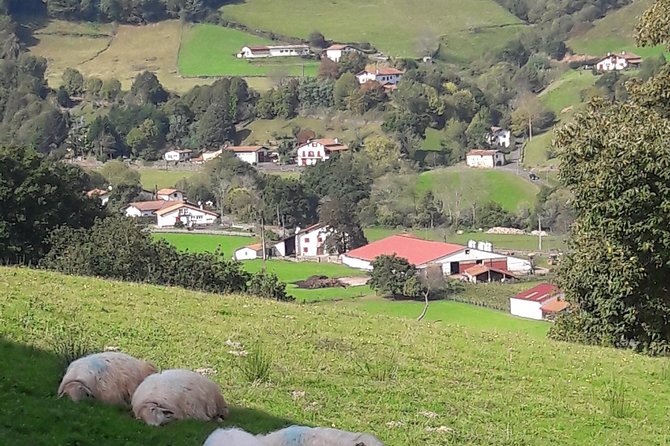
Next comes Ainhoa, one of those villages where multiple traditions show up at once. One highlight is a jai-alai handball court located alongside the church area. That’s not just a quirky detail—it reflects how Basque sport and community life historically overlapped with the center of village existence.
You’ll also notice white and red houses, a look that immediately reads as Basque and helps the village feel cohesive rather than random. The cemetery adds a more unusual layer: it’s known for traditional disc-topped monuments, which give the resting place a recognizable local identity.
The stop is built to feel like a proper village visit, not a quick photo pull-over. If you enjoy slow looking—watching how a community arranges space—this is where you’ll feel the day click.
Why Ainhoa works on a private tour: you can ask what you’re seeing (like the sport court location or the cemetery marker style) and get direct interpretation, rather than guessing.
Sare at the foot of La Rhune: prehistoric roots with preserved village life
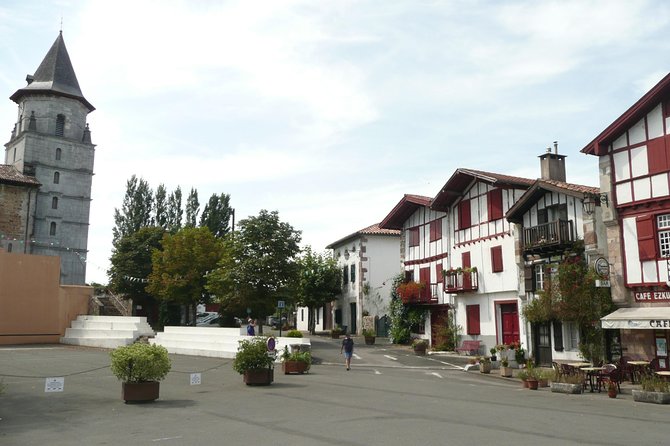
The final town focus is Sare, described as one of the most beautiful villages, placed at the base of the first mountain in the Pyrenees mountain range, La Rhune. The information also mentions Sare as a major prehistoric site and notes that the village has carefully preserved its character.
So you’re getting two kinds of time travel in one stop: long-term human presence (prehistoric) and later cultural preservation (the village look you see today). Again, this is where a guide earns their pay. Otherwise, you might register Sare as simply pretty and move on. With a good guide, you connect beauty to continuity.
This part of the schedule is about 1 hour 30 minutes. Like the other villages, it’s a free-admission time window based on what’s provided.
If you like villages that feel lived-in rather than staged for day trippers, Sare is a smart way to end the day. It gives closure after the pepper visuals and Ainhoa’s standout village features.
Price and what you’re really getting for $433.48 per person
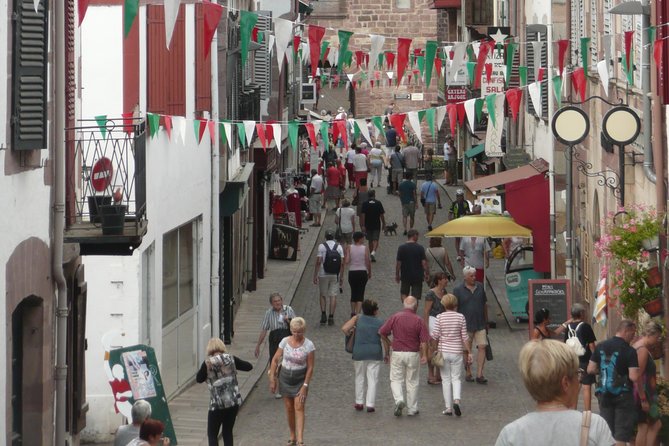
At $433.48 per person for a 7 to 8 hour private day, you’re not buying a cheap “see a few spots” outing. You’re buying convenience and control: pickup and drop-off, private transportation, a professional guide, navigation help, and bottled water.
To judge value, look at what’s included that day-trip packages often skip:
- Private vehicle for your group (not shared seating)
- Hotel pickup and drop-off in San Sebastian
- Driver/guide + professional guide coverage
- Taxes/fees/fuel surcharge included
- Admission is free for the listed stops/time windows
- Local product tasting included (specific items not listed, but the intent is there)
The main gap is food. Food and drinks aren’t included, so you should plan for at least lunch or a mid-day bite plus water/extra drinks if you need them. The tour gives bottled water, which helps, but it doesn’t replace meals.
My practical advice: budget for food on top of the tour price, and treat lunch as part of the trip rhythm. If you show up hungry, the day can feel longer than it needs to, especially with the road segments through the countryside.
Also, there are group discounts listed. If you have a small group traveling together, ask about how that works when you book, because private tours can become far more reasonable per person when the group is larger.
Who this tour fits best (and who should think twice)
This is a great fit if you:
- Want a private day where your guide can set the pace
- Care about Basque culture and want it explained in context, not just described
- Like village-style travel with enough time to actually walk and look
- Appreciate regional food culture, especially pepper and agricultural traditions
- Prefer English commentary with local guidance
It might be less ideal if you:
- Don’t enjoy driving time and prefer city-only routes
- Want a tour price that covers every meal (this one does not)
- Are looking for a big-ticket museum day (this is village-and-countryside focused)
And one more note: the tour is described as offered in English and “most travelers can participate.” That’s helpful, but it’s still a full day, so plan for walking in older towns and some uneven surfaces.
Should you book this French-Basque countryside private tour?
I’d book it if you want your Basque Country day to feel like a guided conversation with a route that makes sense: start with medieval Camino context at Saint-Jean-Pied-de-Port, connect agriculture and architecture at Espelette, and then land on village identity at Ainhoa and Sare. The private format matters here because the story is in the details, and the guide time is what brings those details to life.
I’d think twice if you hate the idea of budgeting for meals on top of the tour price, or if you’re sensitive to long driving stretches. If that’s you, the tour could still work, but you’ll want to bring extra patience—and a snack plan.
If you book, lean into the guide. Names like Juan and Daniel were singled out for their knowledge and warmth, and that’s exactly what turns a list of stops into a day you’ll remember.
FAQ
What time does the tour start?
The start time is 9:00 am.
Is hotel pickup and drop-off included?
Yes. Hotel pickup and drop-off are included, and you should share your accommodation address if you are staying in an apartment.
Is this tour private?
Yes. It’s a private tour, and only your group participates.
What language is the tour offered in?
The tour is offered in English.
How long is the tour?
It lasts about 7 to 8 hours.
Where does the tour go?
It includes stops in Saint-Jean-Pied-de-Port, Espelette (with a drive through Bidarray and along Pass du Roland), and Ainhoa and Sare.
Are entrance fees included?
The listed admission for the stops is free, and the tour includes all taxes, fees, and handling charges.
Does the tour include food and drinks?
No. Food and drinks are not included, though local agricultural products are tasted during the experience.
What transportation is used?
Round-trip transportation is provided via a private vehicle.
What is the cancellation policy?
Free cancellation is available up to 24 hours in advance for a full refund.
Your Group Only, With a Guide
- San Sebastian Top Pintxos Private Tour
★ 5.0 · 142 reviews - Private Pintxos and Wine Tour in San Sebastián
★ 5.0 · 101 reviews - Private San Sebastian Pintxos Tour with Local Guide
★ 5.0 · 83 reviews - Private Day in Rioja from San Sebastian
★ 5.0 · 80 reviews - Full Rioja Wine Tour with Lunch from San Sebastian Private Tour
★ 5.0 · 69 reviews - Private Cultural Tour: Biarritz, St Jean de Luz & Hondarribia
★ 5.0 · 64 reviews
More Donostia Trips, Reviewed
- San Sebastian Old Town Pintxos & Wine Tour Small Group Tour
★ 5.0 · 1,102 reviews - San Sebastian: Boat Tour with Stop at Santa Clara
★ 4.6 · 733 reviews - San Sebastian Pintxo Food, Wine & Market Foodie Tour(Small Group)
★ 5.0 · 621 reviews - Small-Group Electric Bike Tour in San Sebastián
★ 5.0 · 603 reviews - Discover San Sebastián’s Best Pintxos on a Unique Culinary Tour
★ 5.0 · 602 reviews - San Sebastian: Sustainable Catamaran Cruise with Audio Guide
★ 4.2 · 527 reviews
Over to the French Basque Coast
- Biarritz and French Coast tour from San Sebastian or Bilbao
★ 4.5 · 197 reviews - Private Cultural Tour: Biarritz, St Jean de Luz & Hondarribia
★ 5.0 · 64 reviews - Biarritz & French Basque Coast Private Tour from San Sebastian
★ 5.0 · 49 reviews - Private Bayonne, Biarritz & St Jean de Luz from San Sebastian
★ 5.0 · 47 reviews - Private French Basque Country Food Tour from San Sebastian
★ 5.0 · 40 reviews - French Basque Countryside Tour from San Sebastian
★ 5.0 · 37 reviews
Just Added: Fresh San Sebastian Tours in the Book

French Basque Coast Tours, compared.
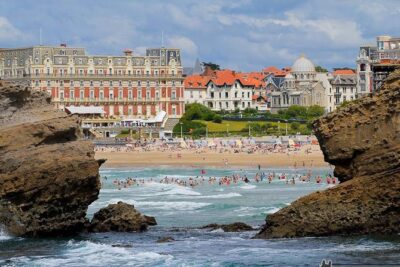 ★ 4.5Biarritz and French Coast tour from San Sebastian or BilbaoFrom $95197 reviews
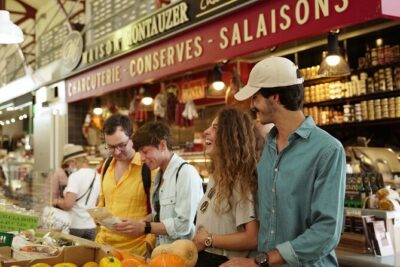 ★ 5.0Private Cultural Tour: Biarritz, St Jean de Luz & HondarribiaFrom $36864 reviews
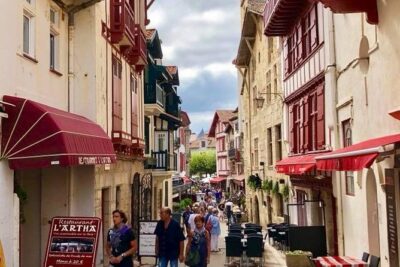 ★ 5.0Biarritz & French Basque Coast Private Tour from San SebastianFrom $75049 reviews
 ★ 5.0Private Bayonne, Biarritz & St Jean de Luz from San SebastianFrom $35447 reviews
 ★ 5.0Private French Basque Country Food Tour from San SebastianFrom $50540 reviews
 ★ 5.0French Basque Countryside Tour from San SebastianFrom $35337 reviews
 ★ 4.2Biarritz and Bayonne from San SebastianFrom $9335 reviews
 ★ 5.0French Coast: Bayonne, Biarritz, San Juan de Luz – Private TourFrom $33534 reviews
Browse the lists this tour appears in