
Reviewed · SAN SEBASTIAN WALKING TOURS
San Sebastian Historic Walking Tour in Small Group
San Sebastián makes more sense on foot. This small-group historic walking tour strings together the city’s best-known sights in about 90 minutes, with a friendly English guide and plenty of context so you’re not just “seeing stuff.” I like the easy, mostly flat pace and the way the guide connects buildings to how the city changed over time.
The two things I’d push to the top are the practical food help and the storytelling. You’ll get clear explanations of what you’re looking at (including the Basque identity angle), and you’ll also walk away with smart, specific pinchos and restaurant recommendations for later.
One thing to consider: most major stops are guided from the outside, and tickets for monuments aren’t included, so you may want to budget a little extra if you want to go in.
In This Review
- Key highlights before you go
- A 90-minute San Sebastián primer that actually helps
- Meeting at Alderdi Eder and getting your orientation right
- Ayuntamiento de San Sebastián: city power in neoclassical stone
- Playa de la Concha: why the postcard beach has a history
- Buen Pastor Cathedral: a spiritual landmark that marks change
- Puente de Santa Catalina and the city’s engineering links
- Donostia Boulevard: where you feel the modern city
- Parte Vieja lanes: the old town’s evolution in real walking form
- The Virgen del Coro church and an old-town square break
- Price and value: what $36.14 buys you (and what it doesn’t)
- Small group logistics: why max 10 is a big deal
- Who should book this tour
- Should you book this San Sebastián historic walking tour?
- FAQ
- How long is the San Sebastián Historic Walking Tour?
- What’s the group size?
- Is the tour in English?
- Are monument or museum tickets included?
- Where do you meet, and where does it end?
- Do I need good weather?
- What’s the cancellation policy?
Key highlights before you go
- Small group size (max 10) keeps the walk comfortable and question-friendly
- Flat walking makes it easier than many “old town” tours
- English guide with strong city context, including Basque culture and language
- Iconic stops from Playa de la Concha to Parte Vieja
- Pinchos-focused suggestions to help you eat well after the tour
A 90-minute San Sebastián primer that actually helps
This tour is built for people who want their bearings fast. In about 1 hour 30 minutes, you cover a tight loop through the places you’ll keep hearing about anyway—then you learn why they matter. That makes your later solo wandering easier, because you’re not staring at landmarks with zero context.
The pace is also a big part of the value. The experience is described as an easy walking tour without hills or steps for most people, and you’re basically covering around 1.5 km (under a mile). That’s long enough to feel like you did something meaningful, but short enough that you’re still fresh for lunch, pintxos, or a beach walk.
And because it’s a small group (maximum 10), the guide can answer questions without turning the whole thing into a lecture. Several people also mention that the guide handles the tour smoothly even when weather isn’t ideal, so you’re not stuck with a “perfect day or nothing” vibe.
Keep pacing Donostia, other routes through town

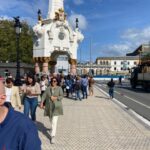
Meeting at Alderdi Eder and getting your orientation right
You start at Udal Liburutegi Nagusia by Alderdi Eder Parkea (in the heart of San Sebastián). It’s a good starting point because it puts you close to the grand promenade and the kind of central streets you’ll likely use later anyway.
From there, the tour flows logically: beachfront, key civic/religious buildings, bridge connections, then into Donostia Boulevard and Parte Vieja. If you’ve ever tried to explore San Sebastián without a plan, you know what can happen: you walk a lot, but it feels random. This tour fixes that by giving you a route you can replay later.
Also, you’ll have a mobile ticket and you’re near public transportation, which is handy if you’re bouncing between beaches, the old town, and your hotel.
Ayuntamiento de San Sebastián: city power in neoclassical stone
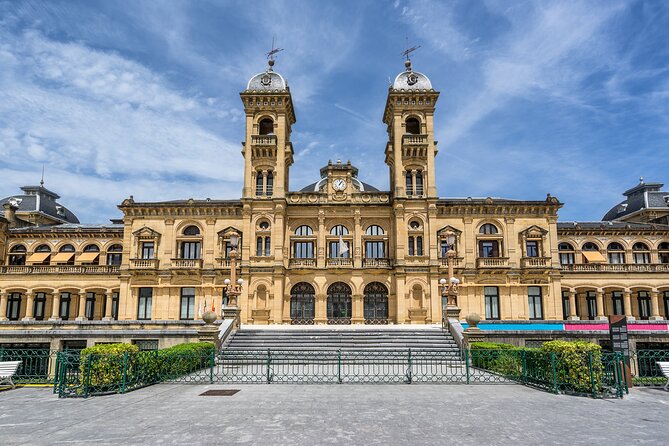
Stop 1 is the Ayuntamiento de San Sebastián—the city hall building right in the center. It’s neoclassical and imposingly ornate, built in the late 19th century, with details that make it feel more “official monument” than plain office.
This is a strong opening stop because it frames the city’s story in a way you’ll understand immediately: civic life, municipal decisions, and how San Sebastián grew and managed its identity as it modernized. Even if you don’t buy a ticket to go inside, the guide’s context helps you read the building like a clue.
Practical note: admission is not included here, so you’ll likely watch from outside unless you choose to add an entry.
Playa de la Concha: why the postcard beach has a history
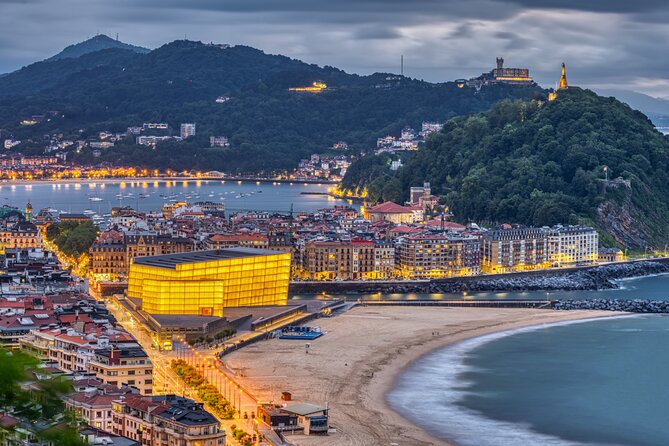
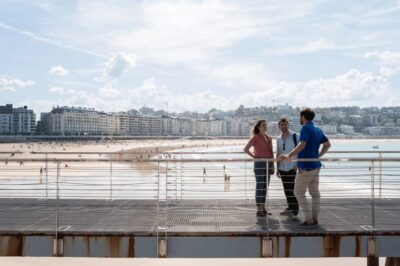
Next comes the big one: La Concha (Playa de la Concha). This isn’t just a pretty starting point. The tour explains how the beach has been tied to the city’s evolution—how it shifted from origins to an international symbol.
Why this matters: in San Sebastián, the beach isn’t separate from the city. It’s part of the city’s image and its pace. When you understand that connection, you’re better equipped to appreciate what you’re seeing—whether you’re there for a swim, a long stroll, or just people-watching.
Admission is free at this stop, so you’re not paying extra to enjoy the view and the setting.
Deeper into the old city
- Explore San Sebastián’s History & Taste Its Flavors at Lunch★ 5.0 · 114 reviews
- Private Cultural Tour: Biarritz, St Jean de Luz & Hondarribia★ 5.0 · 64 reviews
- San Sebastián Food & History Tour: Dinner with a Local Twist★ 5.0 · 51 reviews
- San Sebastián Private Food-Historical tour & meal at a Gastronomy Club★ 5.0 · 33 reviews
- San Sebastian Historic Walking Tour in Small Group★ 5.0 · 26 reviews
Buen Pastor Cathedral: a spiritual landmark that marks change
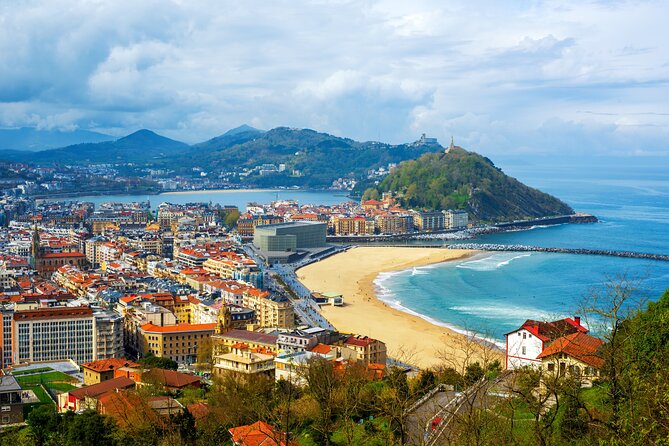
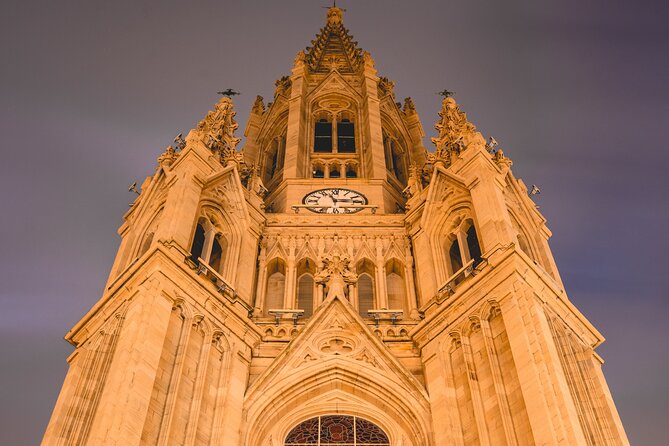
Then you head to Buen Pastor Cathedral. It’s described as an imposing landmark tied to the city’s spirituality and historical roots. The guide also frames it as a kind of witness to how San Sebastián has transformed over time.
This stop is useful because it adds another layer besides architecture and streets: it shows how religious sites often sit at the center of a city’s continuity. Even if you don’t go inside, understanding what the cathedral represents helps the old town feel less like a “tourist maze” and more like a living place with long memory.
Again, admission isn’t included for monument entry.
Puente de Santa Catalina and the city’s engineering links
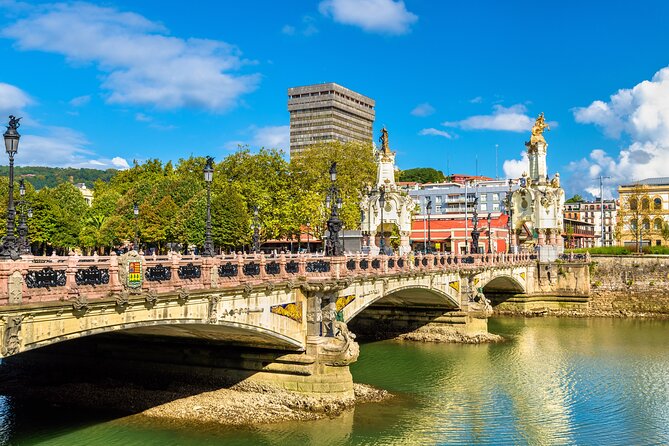
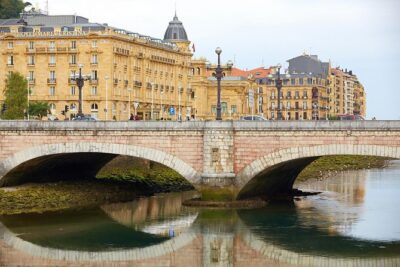
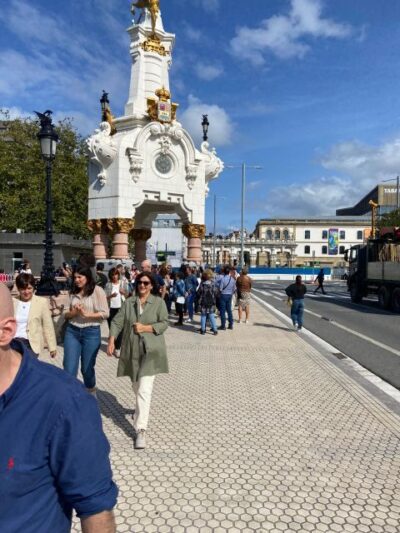
Stop 4 focuses on the Puente de Santa Catalina, part of a wider bridge story. The tour mentions the María Cristina Bridge and the Santa Catalina Bridge, connecting engineering history to urban development.
Bridges are underrated as teaching tools. They show you how a city moves people and reshapes neighborhoods. In a place like San Sebastián, where the water and the urban design are constantly in conversation, a bridge stop helps you “see” the geography as something intentional rather than accidental.
Admission is free here, so you’re paying only for the guidance and the route, not for the viewing points.
Donostia Boulevard: where you feel the modern city
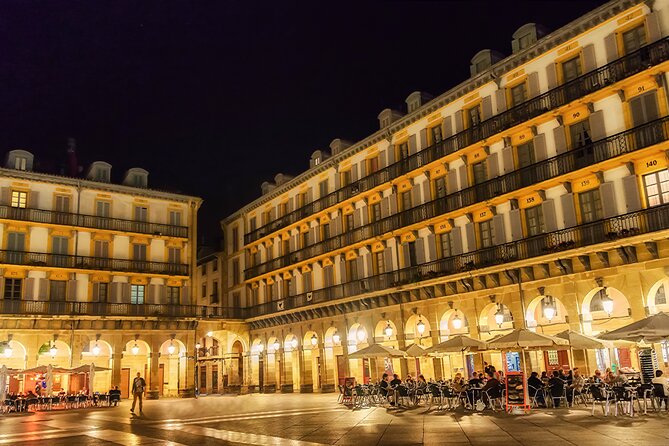
After the bridge, you walk along Donostia Boulevard, a pedestrian avenue lined with elegant buildings, fashion stores, and places to grab coffee, bars, and food. This is where the tour balances historic details with current everyday life.
For me, this stop is valuable because it tells you how to enjoy the city, not just observe it. You learn where locals and visitors naturally circulate, and that’s where your independent time often gets better: you’ll know where to wander when you want something casual, and you’ll spot the kind of atmosphere you can match.
This portion is also a good “breather” between the heavier story stops and the old town lanes.
Parte Vieja lanes: the old town’s evolution in real walking form
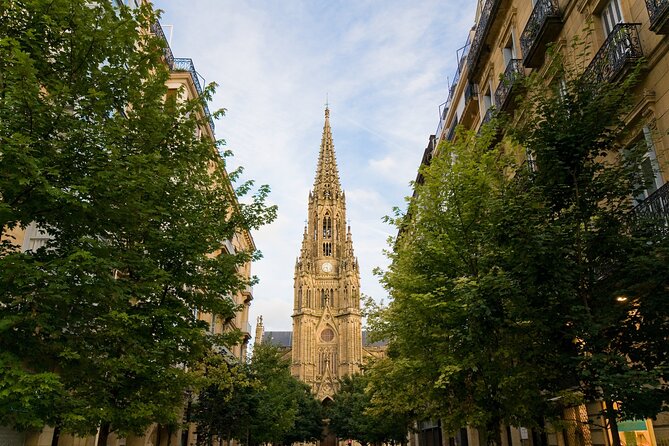
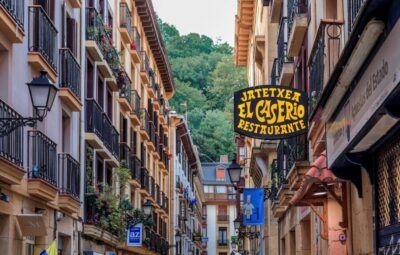
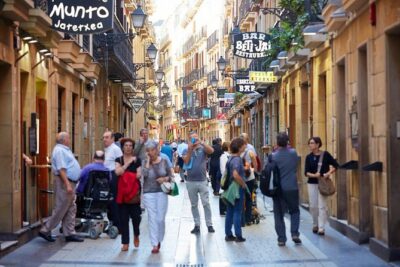
Then you hit Parte Vieja, San Sebastián’s Old Town. The tour spends about 25 minutes here, moving through narrow streets where architecture and local traditions blend.
What you get out of this part is the sense of transformation. The area is explained as having evolved from a historical and commercial center into a lively meeting point. That sounds like marketing copy—until you’re walking it and noticing how the streets pull you toward squares, terraces, and nighttime energy.
This is also the area where your guide’s recommendations start to matter most. Once you understand the geography of the old town, choosing where to stop for pintxos becomes easier. You’re not guessing based on luck.
Admission is free for this walk segment.
The Virgen del Coro church and an old-town square break
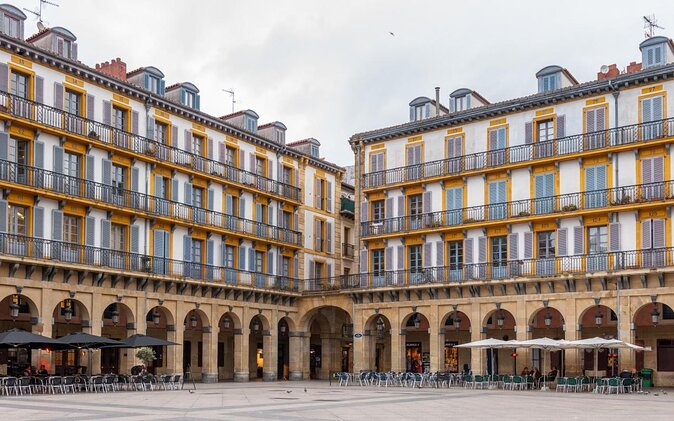
Inside the old town, the tour highlights a major baroque-style church built in the 18th century with an impressive façade described as neoclassical. The interior is noted as richly decorated with religious art and ornate architectural details.
The church is also tied to the Virgen del Coro, the patron saint of the city, and it’s framed as a place of devotion and pilgrimage. Add in the fact that its elevated location gives panoramic views, and you can see why it’s included: it’s both spiritual and scenic.
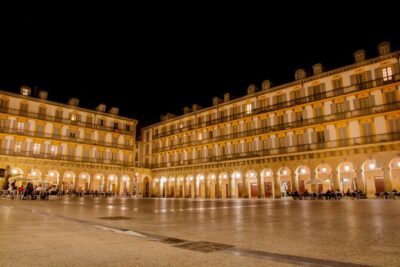
After that, the tour includes time in a charming public square surrounded by baroque-style buildings. The point here isn’t just the architecture—it’s the break. You can relax, plan your next steps, and grab a drink on nearby terraces while everything feels very “San Sebastián.”
Admission isn’t included for the monuments, so if you’re the type who likes to go inside, you’ll want to decide on the spot. The guided explanation makes that decision feel easier, because you’ll know what to look for.
Price and value: what $36.14 buys you (and what it doesn’t)
At $36.14 per person for about 90 minutes, the value comes from three things: a local guide, coverage of multiple high-signal landmarks, and a small-group format.
What’s included:
- Local guide
- All fees and taxes
- The tour runs in English
- Group discounts may apply
- Mobile ticket
What’s not included:
- Tickets to monuments or museums
That last point matters because a walking tour can either be “outside explanations only” or it can quietly become “I want to enter everything.” Here, you should treat it as guided sightseeing with optional entries. If you want interior access at places like the cathedral or the church, plan for that separately.
Still, you don’t feel shortchanged. The route is long enough to connect the dots, and the guide’s job is to make you understand what you’re seeing even when you’re not paying for entry.
Small group logistics: why max 10 is a big deal
A maximum of 10 travelers changes the whole experience. You can hear explanations, ask questions, and keep moving at a comfortable pace without feeling like you’re stuck behind someone taking photos every 30 seconds.
It also helps with the rhythm of the tour. San Sebastián is a “walk and linger” kind of city. When a group is too large, you spend half your time waiting. With a small group, you spend more time actually walking the streets and absorbing the sights.
Good weather is required, which makes sense for a walking-focused route. Even so, people note the tour can still feel fun when conditions aren’t perfect, so you’re not automatically stuck if the forecast isn’t perfect—just be ready that the operator may adjust if weather is poor.
Who should book this tour
This is a great pick if:
- You’re visiting San Sebastián for the first time and want an organized route
- You prefer small group experiences over big buses of people
- You want both architecture/street context and practical food ideas
- You’ll enjoy a walk that stays mostly flat and doesn’t eat your whole day
It may be less ideal if:
- You mainly want long museum time or lots of indoor ticketed sites
- You hate walking for about a mile (even at an easy pace)
- You’re expecting every stop to be an included entry
Should you book this San Sebastián historic walking tour?
I’d book it if you want to start well. The tour is short, centrally placed, and focused on the kind of sights you’ll want to return to later—especially Playa de la Concha, the old town Parte Vieja, and the bridge/streets that help the city click.
The guide factor matters here. A standout name that comes up is Helena, and people highlight her as friendly, lively, and strong on English, plus quick with helpful restaurant and pinchos suggestions. If you like tours where the guide answers questions and points you toward great places to eat after, you’ll likely feel the same.
If you’re the type who cares about interiors, just remember tickets aren’t included—plan a bit of extra spending for entry where you really want it. For most first-timers, that’s a small tradeoff for getting oriented fast.
FAQ
How long is the San Sebastián Historic Walking Tour?
The tour runs for about 1 hour 30 minutes.
What’s the group size?
The tour has a maximum of 10 travelers, which keeps it small-group and easier for questions.
Is the tour in English?
Yes. The tour is offered in English.
Are monument or museum tickets included?
No. Tickets to monuments or museums are not included.
Where do you meet, and where does it end?
You meet at Udal Liburutegi Nagusia (Alderdi Eder Parkea, 1, 20004 Donostia / San Sebastián) and the tour ends back at the meeting point.
Do I need good weather?
Yes. The experience requires good weather. If it’s canceled due to poor weather, you’ll be offered a different date or a full refund.
What’s the cancellation policy?
You can cancel for a full refund if you cancel up to 24 hours in advance of the experience start time.
Into the Old Town History
- San Sebastian E-bike trour: Basque History and Cultural.
★ 5.0 · 367 reviews - Explore San Sebastián’s History & Taste Its Flavors at Lunch
★ 5.0 · 114 reviews - Private Cultural Tour: Biarritz, St Jean de Luz & Hondarribia
★ 5.0 · 64 reviews - San Sebastián Food & History Tour: Dinner with a Local Twist
★ 5.0 · 51 reviews - San Sebastián Private Food-Historical tour & meal at a Gastronomy Club
★ 5.0 · 33 reviews - Discover the History, Market, Wine & Pintxos in San Sebastian
★ 5.0 · 6 reviews
More Donostia Trips, Reviewed
- San Sebastian Old Town Pintxos & Wine Tour Small Group Tour
★ 5.0 · 1,102 reviews - San Sebastian: Boat Tour with Stop at Santa Clara
★ 4.6 · 733 reviews - San Sebastian Pintxo Food, Wine & Market Foodie Tour(Small Group)
★ 5.0 · 621 reviews - Small-Group Electric Bike Tour in San Sebastián
★ 5.0 · 603 reviews - Discover San Sebastián’s Best Pintxos on a Unique Culinary Tour
★ 5.0 · 602 reviews - San Sebastian: Sustainable Catamaran Cruise with Audio Guide
★ 4.2 · 527 reviews
Donostia on Foot, Keep Going
- San Sebastian: Walking Tour with Pintxo and Drink
★ 4.5 · 220 reviews - San Sebastian walking tour with pintxo and drink option
★ 4.5 · 204 reviews - San Sebastián: Cultural Walking Tour
★ 4.7 · 53 reviews - Coastal “Winery Camino Trail” Walking Tour from San Sebastian
★ 5.0 · 51 reviews - San Sebastian: Private custom walking tour with a guide
★ 4.5 · 44 reviews - San Sebastian: City Highlights Guided Walking Tour
★ 4.9 · 35 reviews
Just Added: Fresh San Sebastian Tours in the Book



San Sebastian Walking Tours, compared.
 ★ 4.5Walking Tour with Pintxo and DrinkFrom $17220 reviews
 ★ 4.5San Sebastian walking tour with pintxo and drink optionFrom $18204 reviews
 ★ 4.7Cultural Walking TourFrom $5153 reviews
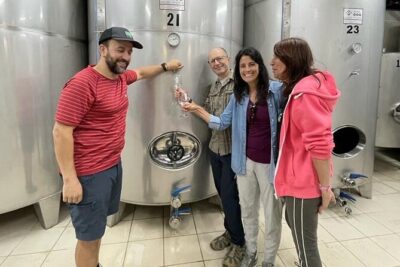 ★ 5.0Coastal “Winery Camino Trail” Walking Tour from San SebastianFrom $19251 reviews
 ★ 4.5Private custom walking tour with a guideFrom $5344 reviews
 ★ 4.9City Highlights Guided Walking TourFrom $3435 reviews
★ 5.0Private Custom Walking Tour With A GuideFrom $5434 reviews
★ 4.9City Highlights Guided Walking TourFrom $3435 reviews
★ 5.0Private Custom Walking Tour With A GuideFrom $5434 reviews
 ★ 4.5Private San Sebastian City Walking TourFrom $16833 reviews
Browse the lists this tour appears in